Teeth whitening is generally not recommended during pregnancy. Most dental and obstetric health organizations advise postponing elective whitening treatments until after delivery and breastfeeding is complete, as the safety of whitening agents in relation to fetal development has not been adequately studied in pregnant women. While there is no definitive evidence that whitening causes harm, the precautionary approach is to avoid exposure to chemicals whose effects on a developing fetus are not yet fully understood. For personalized advice about safe dental care during pregnancy, visiting a trusted Dental Clinic in Alliston, Ontario ensures you receive guidance based on your specific health situation.
Pregnancy is a time when even routine medications and exposures are carefully evaluated for safety. The active whitening agents in most treatments, primarily hydrogen peroxide or carbamide peroxide, are absorbed through the gum tissue and enter the bloodstream in small amounts. Because no large-scale studies have evaluated their effect on fetal development, the standard clinical recommendation is to err on the side of caution. For comprehensive Dental Care in Alliston, Ontario, Dominion Street Dental provides safe dental care throughout pregnancy and will discuss what treatments are appropriate at each stage.
What Is Teeth Whitening?
Teeth whitening refers to the use of chemical bleaching agents, most commonly hydrogen peroxide or carbamide peroxide (which breaks down into hydrogen peroxide and urea), to lighten the color of tooth enamel and dentin. These agents work by penetrating the enamel and reacting with the colored compounds embedded within the tooth structure, breaking them down into lighter components that reflect more light.
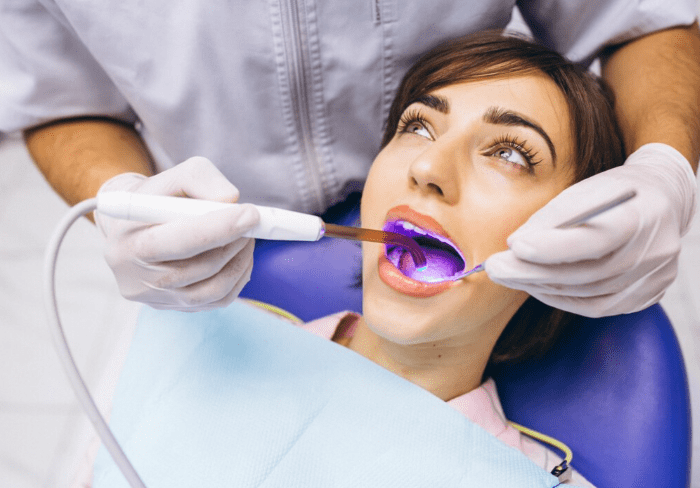
Whitening treatments are available in two main forms: professionally administered in-office treatments using high-concentration peroxide gels activated by light, and take-home treatments using custom trays and lower-concentration gels provided by a dental professional. Over-the-counter products including whitening strips, toothpastes, and rinses also contain peroxide in lower concentrations.
Why Whitening Is Deferred During Pregnancy
Lack of Safety Data
The primary reason teeth whitening is not recommended during pregnancy is the absence of controlled clinical studies evaluating its effects on fetal development. Medical and dental ethics require extensive evidence of safety before recommending any treatment to pregnant patients. Because no such evidence currently exists for whitening agents, the precautionary principle applies.
Systemic Absorption of Peroxide
Hydrogen peroxide does not remain confined to the tooth surface. It is absorbed through the gum tissue and enters the systemic circulation in small amounts. While the quantities involved in whitening are relatively small, the potential effects of peroxide byproducts on a developing fetus at critical stages of organ formation remain uncharacterized.
Increased Gum Sensitivity During Pregnancy
Pregnancy hormones cause gum tissue to become more sensitive and more reactive to irritants, including the peroxide used in whitening agents. Whitening during pregnancy is therefore more likely to cause gum irritation, soreness, and inflammation than at other times. This increased permeability also means greater potential systemic absorption.
Heightened Tooth Sensitivity
Many pregnant women experience increased tooth sensitivity due to dietary changes, morning sickness (which exposes teeth to stomach acid), and physiological changes in the mouth. Whitening treatment commonly causes temporary increased sensitivity, and adding this to an already sensitive mouth can result in significant discomfort that is best avoided.
What Dental Treatments Are Safe During Pregnancy?
Avoiding whitening does not mean avoiding dental care entirely. Many routine and necessary dental treatments are safe at all stages of pregnancy and should not be deferred.
• Professional cleaning and scaling: Not only safe but strongly recommended during pregnancy, as pregnancy hormones increase the risk of gum disease.
• Dental X-rays with proper shielding: When clinically necessary, digital X-rays with a lead apron and thyroid collar are safe. Routine X-rays that are not clinically necessary are typically deferred.
• Local anesthesia for necessary procedures: Lidocaine with epinephrine at standard dental dosages is considered safe during pregnancy.
• Tooth-colored fillings to treat active decay: Treating decay during pregnancy prevents infection that could pose a greater risk to the pregnancy than the dental procedure itself.
• Tooth extractions when necessary: Untreated dental infections are more dangerous than the extraction procedure. Emergency and necessary extractions can be safely performed during pregnancy.
Signs That You Should Visit a Dentist During Pregnancy
• Bleeding or swollen gums, which may indicate pregnancy gingivitis requiring professional treatment.
• Toothache or dental pain, which should be assessed rather than managed with over-the-counter pain relief alone.
• Sensitivity or pain that suggests a cavity developing.
• A visible lump or growth on the gum tissue (which may be a pregnancy epulis, a benign growth related to hormonal changes).
• It has been more than six months since your last dental checkup.
Understanding why whitening is typically deferred during pregnancy, what dental treatments are safe during this time, and what options are available after delivery helps pregnant patients make well-informed decisions without compromising their health or their baby’s wellbeing. A caring Dentist in Alliston, Ontario, will address all your dental health questions during pregnancy with honesty and without judgment.
Once your baby arrives and you have finished breastfeeding, professional whitening is a safe and effective option. The page for Teeth Whitening in Alliston, Ontario, provides details on the whitening treatments available at Dominion Street Dental and what each involves in terms of the process, results, and maintenance.
Safe Alternatives for a Brighter Smile During Pregnancy
While chemical whitening is off the table during pregnancy, several safe approaches can help your smile look and feel its best during this time:
• Professional cleaning: Removing surface stains through professional polishing can brighten teeth noticeably without any chemical exposure. A professional clean removes the extrinsic stain from coffee, tea, and food that accumulates on the tooth surface.
• Whitening toothpaste for surface stains: Whitening toothpastes that work through mild abrasion (rather than peroxide chemistry) can help manage surface discoloration. Be cautious with highly abrasive formulations, which can contribute to enamel wear over time.
• Dietary modification: Reducing consumption of coffee, tea, red wine, and dark-pigmented foods reduces the rate at which surface staining accumulates.
• Oil pulling: Some patients use coconut oil pulling as a natural oral health practice. While evidence for whitening effects is anecdotal, the practice is generally considered safe during pregnancy and may have some benefits for overall oral hygiene.
After Pregnancy: When Can You Whiten Safely?
Most dental professionals recommend waiting until after breastfeeding is complete before beginning whitening treatment. While the amounts of peroxide that reach breast milk are very small, the same precautionary principle that applies during pregnancy supports waiting until the baby is no longer breastfeeding. If you are not breastfeeding, whitening can typically be discussed with your dentist shortly after delivery.
The Step-by-Step Process for Safe Whitening After Pregnancy
1. Schedule a comprehensive dental checkup to assess gum health, identify any decay or erosion that developed during pregnancy, and ensure your teeth and gums are in optimal condition for whitening.
2. Address any gum disease or decay before beginning whitening, as these conditions can cause pain and complications when whitening agents are applied.
3. Discuss your whitening goals with your dental team, including the shade change you are hoping to achieve, your timeline, and any sensitivity concerns.
4. Choose between in-office whitening for faster results or custom take-home trays for a more gradual approach.
5. Follow the instructions provided and use a sensitivity-management toothpaste as recommended.
6. Maintain results with a whitening toothpaste, touch-up treatments as needed, and dietary modifications to limit re-staining.
Common Mistakes Pregnant Patients Make With Whitening
• Using over-the-counter whitening strips during pregnancy under the assumption that they are safe because they are widely available. Availability does not equal safety for pregnant patients.
• Not informing the dental team of the pregnancy when booking whitening appointments.
• Assuming tooth discoloration during pregnancy is permanent. Most pregnancy-related tooth changes are reversible once the hormonal environment normalizes.
• Not attending dental checkups during pregnancy due to concerns about safety. Routine and necessary dental care is safe and beneficial during pregnancy.
Frequently Asked Questions
Q1. Can I use whitening toothpaste while pregnant?
Whitening toothpastes that work primarily through mild abrasion are generally considered safe during pregnancy. However, toothpastes that contain significant concentrations of hydrogen peroxide should be avoided following the same precautionary principle that applies to other whitening treatments. Discuss specific product choices with your dental professional.
Q2. Will my teeth become permanently discolored during pregnancy?
Pregnancy can affect tooth color through several mechanisms: morning sickness exposes teeth to stomach acid, dietary cravings may include more staining foods and beverages, and dry mouth reduces the protective effect of saliva. Most of these effects are manageable with good hygiene and reversible with professional care after delivery.
Q3. Is dental X-ray exposure during pregnancy dangerous?
Modern dental X-rays, particularly digital X-rays, produce very low radiation exposure. With proper lead apron and thyroid collar protection, the radiation reaching the fetus is negligible. X-rays that are clinically necessary should not be avoided during pregnancy. Routine X-rays for monitoring purposes are typically deferred when convenient to do so.
Q4. How long after delivery can I whiten my teeth?
If you are not breastfeeding, you can discuss whitening with your dentist after your first postpartum checkup, typically around six weeks after delivery. If you are breastfeeding, most dental professionals recommend waiting until breastfeeding has been completed, though the amount of whitening agent reaching breast milk is very small.
Q5. Are charcoal whitening products safe during pregnancy?
Activated charcoal whitening products lack adequate clinical evidence for both safety and efficacy in any population. During pregnancy, the added uncertainty about their composition and the potential for abrasive damage to enamel makes them a poor choice. Standard brushing and professional cleaning is a safer and more effective approach to surface stain management during pregnancy.
Conclusion
Teeth whitening is appropriately deferred during pregnancy as a precautionary measure, given the absence of safety data for whitening agents in pregnant patients. This does not mean neglecting dental health during pregnancy; in fact, professional cleanings, cavity treatment, and gum disease management are all safe and strongly encouraged. After delivery and the completion of breastfeeding, professional whitening is a safe, effective, and accessible way to achieve the brighter smile you have been looking forward to. Dominion Street Dental, at 46 Dominion St, Alliston, ON L9R 1L5 and reachable at (705) 410-0961 or domdentalinfo@gmail.com, is one of the best dental clinics in Alliston, Ontario and has extensive experience in pregnancy dental care. The team at Dental Practice in Alliston, Ontario will guide you through what is safe, what to prioritize, and what can wait until after delivery.