Digital dental X-rays are safe for children and deliver significantly less radiation than traditional film X-rays, making them a low-risk and highly valuable diagnostic tool in modern pediatric dentistry. A full set of four bitewing digital X-rays delivers a radiation dose roughly equivalent to the natural background radiation a person absorbs from the environment during a single day of normal activity. For parents who want a clear and thorough explanation of how X-rays are used for their children and why the benefits outweigh the minimal risks, speaking directly with the professional team at a trusted Dental Clinic in Alliston, Ontario in Alliston provides the most accurate and reassuring information.
Parental concern about radiation exposure for children is completely reasonable and deserves a direct and honest answer. The dental profession has made significant advances in X-ray technology over the past two decades, and digital imaging represents the current standard in clinical practice for good reason. Digital sensors require less radiation than film to produce a diagnostic-quality image, and the images are immediately available on a screen for review. Understanding exactly how much radiation is involved and how it compares to other everyday exposures helps parents make informed decisions about their children’s care.
Understanding Radiation Dose in Context
Numbers alone are difficult to evaluate without context. Comparing the radiation dose from a dental X-ray to other everyday sources makes the actual exposure understandable. Comprehensive Dental Care in Alliston, Ontario at Dominion Street Dental, 46 Dominion St, Alliston, ON L9R 1L5, always includes a full explanation of the X-rays recommended for each child and the specific diagnostic purpose they serve before any exposure is made.
• One digital bitewing dental X-ray: approximately 0.005 millisieverts (mSv)
• Four digital bitewing dental X-rays (a standard full set): approximately 0.02 mSv
• One day of natural background radiation from soil, radon, and cosmic rays: approximately 0.008 mSv
• A domestic flight of four to five hours: approximately 0.03 mSv
• A chest X-ray: approximately 0.10 mSv
• Digital panoramic dental X-ray (full jaw image): approximately 0.014 mSv
How Digital X-Rays Compare to Traditional Film
Digital X-ray sensors require approximately 60 to 90 percent less radiation than conventional film X-rays to produce a diagnostically equivalent image. This dramatic reduction, combined with the digital processing that eliminates darkroom chemicals and provides instant high-resolution images for the patient and dentist to review together, is why the profession has moved comprehensively to digital imaging.
Why Children Need Dental X-Rays
Dental X-rays in children serve diagnostic purposes that cannot be served by visual examination alone, regardless of how skilled or thorough the examining dentist. A qualified Dentist in Alliston, Ontario will take only the specific images that are clinically indicated based on the child’s age, dental development, and risk profile, never as a routine protocol applied uniformly to all patients.
Detecting Interproximal Cavities
Cavities that form between the teeth, in the contact areas where adjacent tooth surfaces touch each other, are invisible on clinical examination. They are only detectable on X-ray. Bitewing X-rays, which image both the upper and lower teeth in the same exposure, are the standard tool for detecting these cavities and are taken on a frequency determined by the child’s cavity risk and how closely the primary teeth are positioned.
Monitoring Permanent Tooth Development
In younger children whose permanent teeth are still developing within the jaw, X-rays allow the dentist to confirm that all permanent teeth are forming normally, identify any that may be missing or in unusual positions, and monitor the process of primary root resorption that drives the natural shedding of baby teeth. Problems identified on X-ray at this stage, such as an impacted permanent tooth, can be addressed with interceptive treatment at a time when the outcome is significantly better than if the problem were discovered years later.
How the Dental Team Minimizes Radiation During X-Rays
Every professional dental practice follows established radiation protection protocols that minimize patient exposure beyond what the clinical indication requires. Dominion Street Dental, the trusted Dental Practice in Alliston, Ontario for families in Alliston, uses all standard and recommended protective measures consistently for every patient.
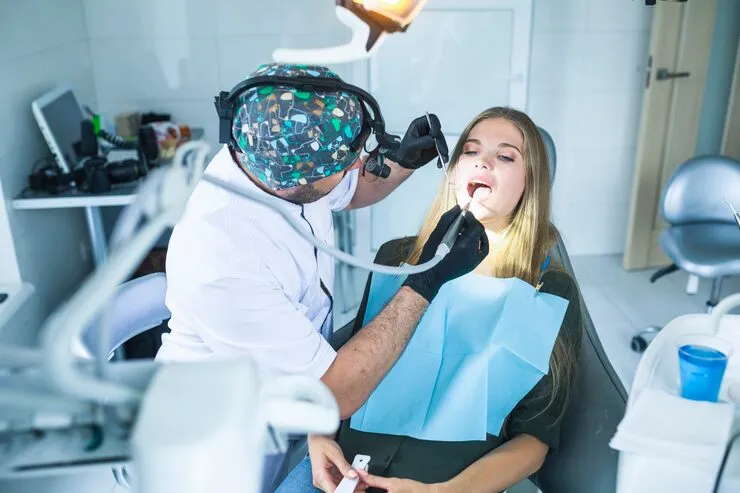
• Lead aprons placed over the patient’s body to shield the torso and reproductive organs from any scatter radiation
• Thyroid collars to protect the thyroid gland, which is particularly sensitive to radiation in growing children
• The fastest digital sensor technology available to minimize the exposure time required for a diagnostic image
• Precise collimation that concentrates the beam to the smallest area necessary
• Clinical justification for every X-ray taken, meaning images are prescribed based on individual need, not applied as a standard protocol to all patients
Digital X-Ray Technology at Dominion Street Dental
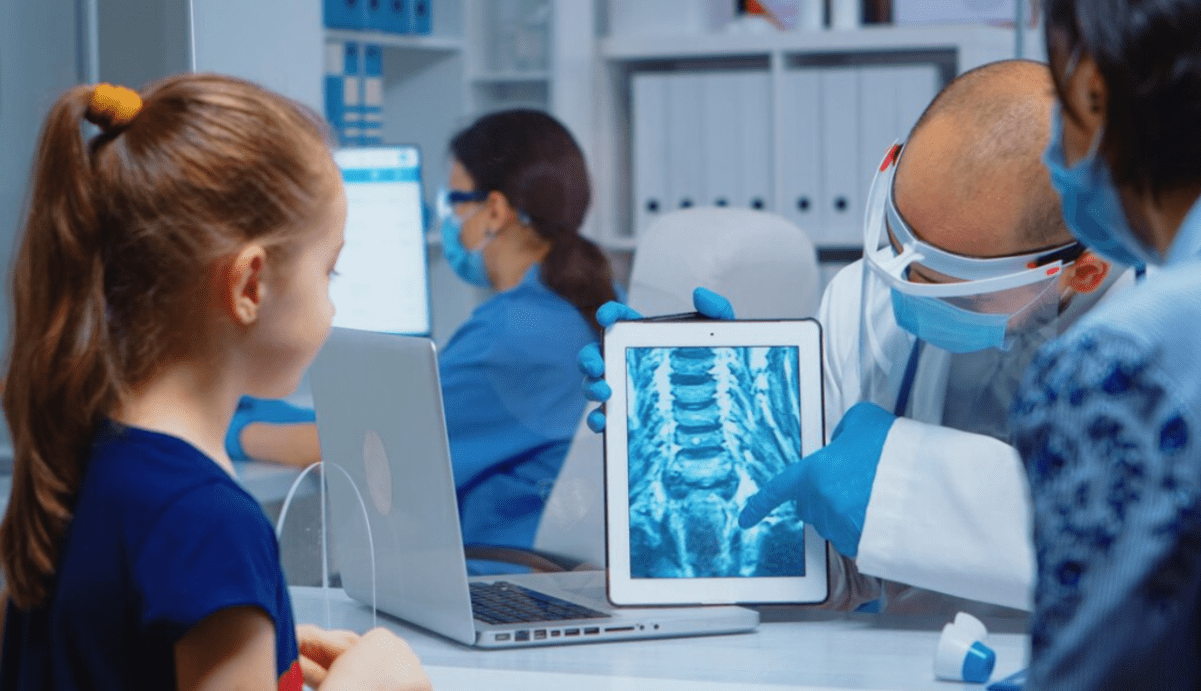
Dominion Street Dental is equipped with modern digital X-ray technology through their dedicated Digital X-Rays in Alliston, Ontario service, providing high-resolution diagnostic images at the lowest achievable radiation exposure for patients of all ages. The immediate digital availability of these images allows the dentist to review findings with parents during the appointment, explaining what is visible on the X-ray and how it influences the treatment plan for their child. Contact the clinic at (705) 410-0961 or email domdentalinfo@gmail.com to discuss your child’s dental imaging needs.
When Children Typically Have Their First X-Rays
The need for X-rays is based on clinical indication, not age milestones. Most dentists consider X-rays when the primary teeth are fully erupted and in contact with each other, creating the interproximal spaces where cavities develop. For many children this occurs between ages two and four. The frequency of subsequent X-rays is determined by the child’s cavity risk: children with high cavity risk or closely spaced teeth may have bitewings annually, while low-risk children may go two years between bitewing series.
Frequently Asked Questions
Can I ask for my child’s dental X-rays to be skipped if I am concerned about radiation?
Parents have every right to ask questions and discuss the clinical reasoning behind recommended X-rays. A dentist will explain specifically what each recommended image is intended to detect and what the consequences of not having it would be. Declining X-rays is a parental right, but it significantly limits the dentist’s ability to detect cavities between teeth, monitor developing permanent teeth, and identify jaw and bone abnormalities. Having an open conversation about your specific concerns usually produces a satisfactory shared decision.
Are panoramic X-rays safe for young children?
Panoramic X-rays capture the entire mouth, both jaws, and the surrounding anatomy in a single image taken from outside the mouth, which many children find more comfortable than the small sensors placed inside the mouth for bitewing X-rays. The radiation dose from a panoramic X-ray is low and comparable to that of a standard bitewing series. They are particularly useful for assessing permanent tooth development and the jaw structure in young patients.
How often should my child have dental X-rays?
The frequency depends on the individual child’s cavity risk and dental development. Children with high cavity risk or closely spaced baby teeth may have annual bitewing X-rays. Children with low cavity risk and well-spaced teeth may go up to two years between series. Panoramic X-rays for overall development assessment are typically taken at certain developmental milestones, around age six to seven and again in early adolescence.
Does the lead apron protect all important areas?
The lead apron covers the torso and can be positioned to cover the thyroid with a separate collar. It effectively shields the radiosensitive organs in the chest, abdomen, and reproductive system from scatter radiation. The direct beam is directed only at the jaw and tooth area, meaning the apron provides protection against the very small amount of scatter that occurs outside the primary beam.
Should I inform the dentist if my child has had recent X-rays for a medical reason?
Yes. Informing the dental team about any recent medical imaging helps them consider the cumulative picture when deciding on timing for dental X-rays. While the radiation doses involved are small and within recognized safe limits, coordinating awareness between your child’s healthcare providers supports well-informed clinical decisions.
Conclusion
Digital dental X-rays are safe, clinically necessary, and a standard component of responsible pediatric dental care. Their radiation dose is minimal in the context of everyday life, and the diagnostic information they provide is genuinely irreplaceable for detecting cavities early, monitoring developing teeth, and ensuring that jaw development is proceeding normally. Dominion Street Dental is one of the best dental clinics in Alliston, Ontario, and the team provides thoughtful, patient-centered X-ray protocols for children of all ages. Call (705) 410-0961 or email domdentalinfo@gmail.com with any questions or to schedule an appointment.